

Father's Day Best Portable Ice Baths for Summer Fathers
🏆 Top Picks at a Glance
 #1
#1
Best Overall
Lifepro Portable Ice Bath Tub with Lid and Storage Bag - Lightweight, Durable Cold Plunge Tub for Home Therapy Sessions -Home & Travel Ice Bath Tub for Adults and Athletes - 14°F - 122°F Temp, Outdoor
$114.99
Check Price →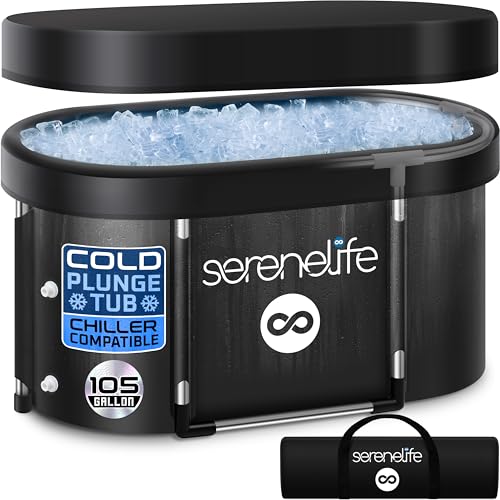 #2
#2
Runner Up
SereneLife 105 Gallon Insulated Oval Ice Bath Tub for Athletes, One Person Cold Plunge Therapy Recovery Pod for Recovery, Multi Layered with Aluminum Frame, Portable for Indoor Outdoor, Home, Gym Use
$79.99
Check Price → #3
#3
Best Value
REBREA Inflatable Ice Bath Tub -Large Clear See Through -Ice Plunge Tub for Cold Water Therapy - Portable Cold Plunge Tub - Indoor & Outdoor - Inflatable Tub for Adults - Ice Tub for Athletes
$74.99
Check Price →Our Top Picks
Affiliate disclosure: if you buy through these links, we may earn a commission at no extra cost to you.


Factors to Consider
Temperature Control and Retention
⚡ Quick Answer
You need a unit that holds temperature within 1-2 degrees over 20 minutes—anything worse and you're not getting consistent stimulus for adaptation. Look at the insulation specs: rigid foam (2-3 inches) beats vinyl-lined pools every time. If the manufacturer won't tell you R-value or insulation thickness, that's your first red flag. Most quality portable tubs maintain 39°F for at least 30 minutes without active chilling, which is your baseline for a legitimate session.
Table of Contents
Active Cooling Capability
A portable ice bath without a chiller is just a cold bath—you're adding ice bags every 15 minutes, which wastes money and time. Built-in chillers (300-500W minimum) get you to therapeutic cold (50-59°F) in under an hour and hold it there consistently. Check if the unit uses compressor-based cooling or thermoelectric; compressor units cost more upfront but outperform thermoelectric by about 40% in temperature stability. For summer use, you'll appreciate not having to raid your freezer every session.
Setup, Durability, and Real-World Use
You're buying this for convenience, so full assembly should take under 20 minutes—if it requires tools beyond a wrench, skip it. The material matters: reinforced PVC or rotomolded polyethylene handles freeze-thaw cycles and UV exposure without cracking; cheap vinyl delaminates after one season in direct sun. Check the seam construction and weight capacity carefully; a 250-lb unit that flexes under your weight will leak within months. Drain plugs, cover design, and whether it fits through a standard doorway are practical considerations most reviewers miss.
Chiller Efficiency and Operating Costs
A chiller using 300W runs you roughly $0.08-0.12 per session at standard US electricity rates, but inefficient units double that. Look at BTU output relative to wattage consumed—you want at least 4,000 BTU per 500W. Some brands artificially inflate specs; independent reviews or user data on actual temperature drop times beat marketing claims. Over a year of 3x weekly use, the difference between an efficient and inefficient chiller is $150-200, which adds up fast.
Portability Versus Stability
Portable doesn't mean you'll actually move it weekly—be honest about where it's living. If it's staying on a deck, weight matters less than stability and weatherproofing; if you're genuinely moving it, look for units under 80 lbs that have reinforced handles. Check the footprint too: the difference between 48" and 60" length sounds small until you're trying to fit it on a patio. A tub that requires a drain hose ran 20 feet to your nearest drain is less portable than specs suggest—account for your actual setup.
Frequently Asked Questions
How cold should the water actually be for cold therapy to work?
Research shows 50-59°F (10-15°C) for 5-10 minutes is the sweet spot for recovery benefits—that's cold enough to trigger parasympathetic nervous system response without excessive shock. Below 50°F, you're fighting diminishing returns and increased injury risk unless you're trained; above 59°F, you're mostly getting the placebo effect. Stay in that zone and you'll see real improvements in soreness and inflammation within 3-4 sessions.
Do I need a chiller if I have access to ice?
You technically don't, but you'll burn through $50-100 monthly in ice and spend 10 minutes per session replacing it—that's a poor trade-off. Ice-only setups also can't maintain stable temperature, so your cold stimulus is inconsistent and your adaptation plateaus faster. If budget is the constraint, start with passive cooling and upgrade to a chiller unit within 6 months once you confirm you're actually using it.
How long can you safely stay in a cold plunge tub?
Most research backs 3-10 minutes at 50-59°F as safe and effective for untrained individuals; trained athletes push 15-20 minutes. Your first session should be 2-3 minutes maximum while your body acclimates—pushing it causes involuntary gasping and hyperventilation that can spike blood pressure dangerously. Listen to your body over internet tough guys. Work up gradually over 2-3 weeks and you'll handle longer durations without the shock.
What's the difference between portable ice baths and contrast therapy setups?
An ice bath alone triggers cold-induced adaptation; contrast therapy (alternating hot/cold) amplifies parasympathetic recovery and blood flow more aggressively through vasodilation and vasoconstriction cycles. If you have access to a sauna or hot tub, 3 minutes cold followed by 3-5 minutes heat, repeated 3-4 rounds, beats ice-only therapy for recovery markers. Most portable units handle just cold water, so contrast requires dual setups or a sauna blanket—plan accordingly.
Will a portable ice bath actually fit on my deck?
Standard portable units range 48-60 inches long and 24-30 inches wide—measure your actual space now and account for 2 feet around it for safe entry/exit. Many decks can handle the 500-800 lb distributed weight, but check your deck rating first (typically 40 lbs per square foot for residential). If space is tight, some manufacturers offer narrower 36-inch models that sacrifice depth slightly but work for most builds.
How often should you use a cold plunge for recovery benefits?
3-4 times weekly is the research-backed sweet spot; more frequent use (daily) causes adaptation plateauing and increased injury risk. Most recovery studies show measurable improvements in soreness and inflammation after 3-4 sessions, then diminishing returns kick in if you exceed 4x weekly. Start at 2x weekly, assess how your body feels after 2 weeks, then adjust. Consistency beats intensity—a 5-minute session 3x weekly outperforms a 20-minute weekly grind.
Can cold plunging actually help with muscle soreness?
Cold water immersion reduces delayed-onset muscle soreness (DOMS) by 20-30% when done within 24 hours of hard training, according to meta-analyses in sports medicine journals. The mechanism is straightforward: cold reduces inflammatory markers and edema, accelerating lymphatic clearance of metabolic waste. That said, it's not a replacement for proper sleep, nutrition, and training periodization—it's a tool that amplifies recovery fundamentals, not a shortcut around them.
Conclusion
You're looking at this for a reason—you've felt the difference recovery makes, and you're tired of expensive gym facilities or ice-bag workarounds. Buy a solid portable ice bath with built-in cooling, proper insulation specs, and a 3+ year warranty, then commit to 3-4 sessions weekly for 8 weeks before you judge results. It's the most underrated piece of home recovery equipment you can own, and your summer schedule finally makes consistent use realistic.


